




Tennis Court Dimensions & Size
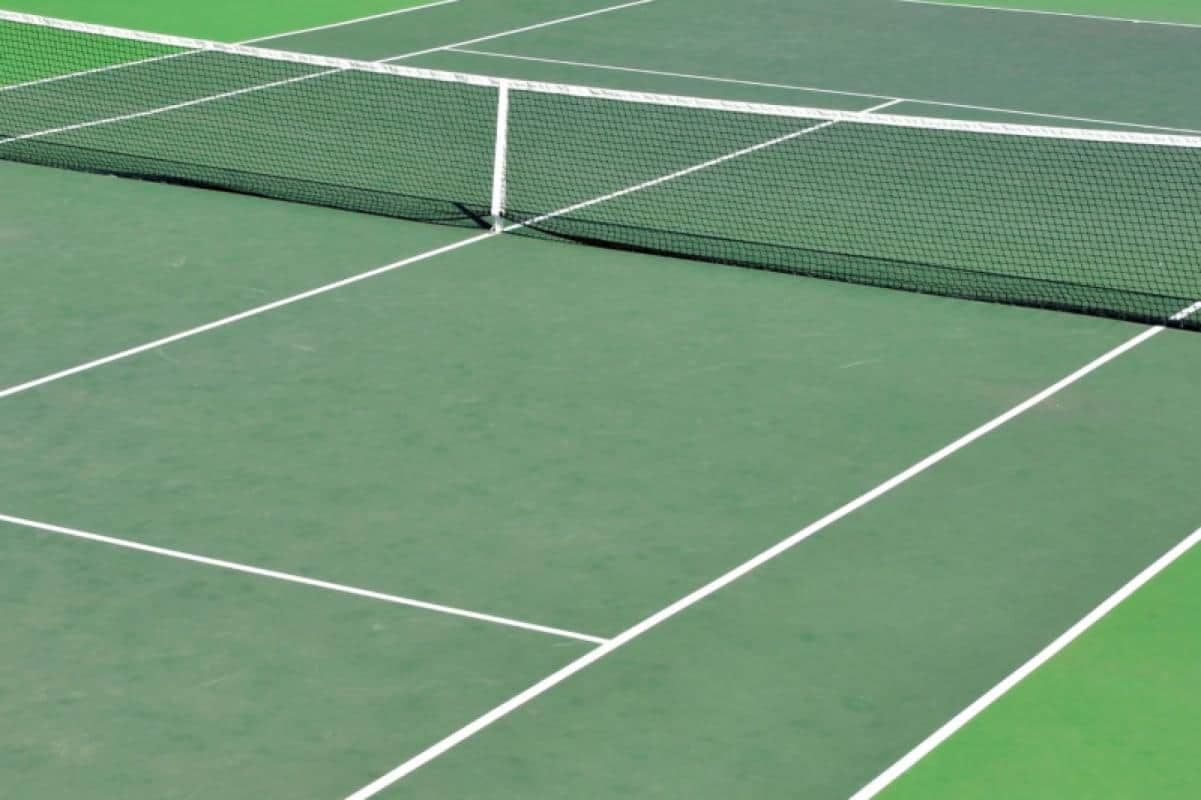
Tennis Court Dimensions
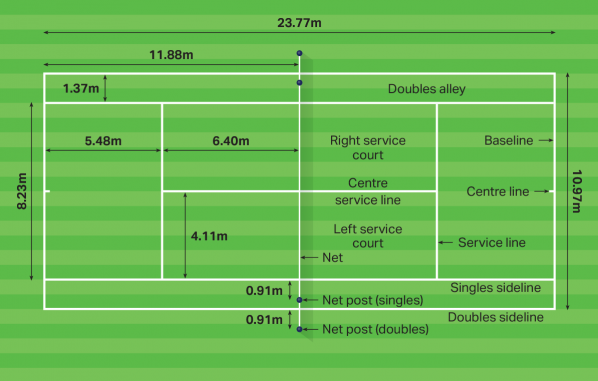
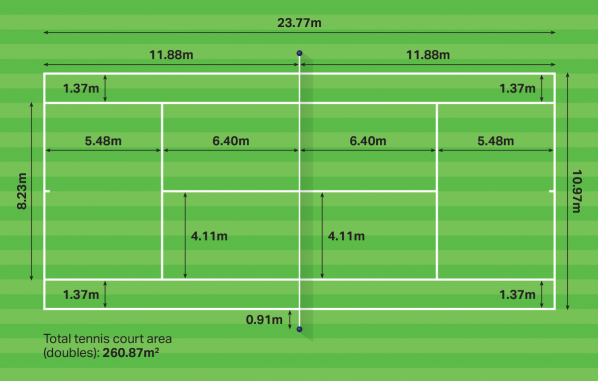
A tennis court is 78ft (23.77m) in length. The courts used for singles matches are 27ft (8.23m) wide, while doubles courts are 36ft (10.97m) wide. The court's service line is 21ft (6.4m) from the net.
Are tennis courts all the same size?
Tennis courts are a standard size. Although there may be some minor discrepancies between courts, all professional ATP and ITF courts should be the same. However, if someone has created a court for their own recreational purpose or Touch Tennis, this could be any size. Both singles and doubles courts tend to be the same size, with the court featuring markings that differentiate the spaces used for singles games and doubles games.
What is the total area of a tennis court?
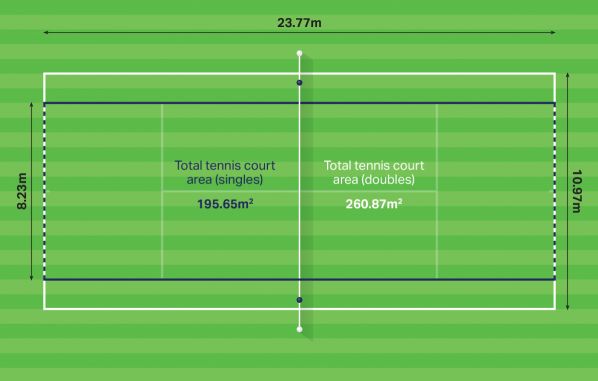
The total area of a tennis court is usually 260.87m² –the total playing area of a doubles court. A singles court, which is often marked within the doubles court has a total playing area of 195.65m².
Length of a tennis court
The length of a tennis court is 23.77m. This is the same for both singles and doubles courts.
Width of a tennis court
The width of a tennis court is usually 10.97m, with the singles lines sitting 1.37m in either side. The width of the singles court is 8.23m.
Singles tennis court dimensions
A single tennis court is 23.77m long and 8.23m wide, with the service line being 6.4m from the net. The total playing area is 195.65m².
Doubles tennis court dimensions
A doubles tennis court is 23.77m long and 10.97m wide, with the service line being 6.4m from the net. The total playing area is 260.87m².
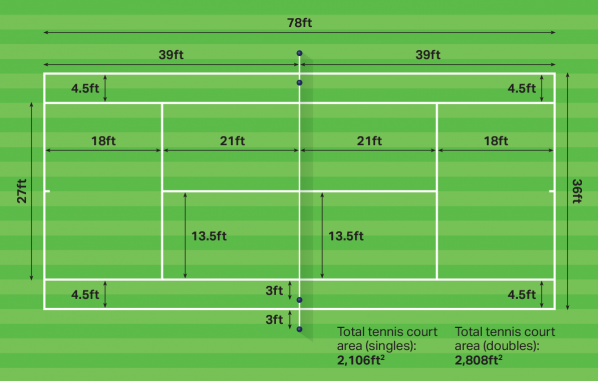
Tennis court size in feet
A tennis court is 78ft long, with a service line 21ft from the net. Courts for singles matches are 27ft wide, while doubles matches courts are 36ft wide. The total playing area for a singles court is 2,106ft² and 2,808ft² for a doubles court.
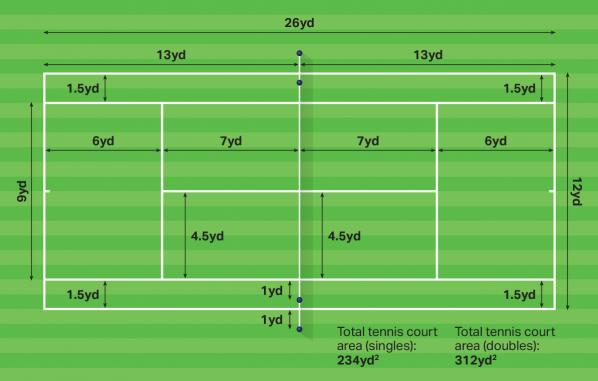
Tennis court size in yards
A tennis court is 26yd long, with a service line 7yd from the net. Singles matches courts are 9yd wide, while doubles matches courts are 12yd wide. The total playing area for a singles court is 234yd² and 312yd² for a doubles court.
What do the boxes on a tennis court mean?
The boxes on a tennis court are used to separate the different regions of the playing area, which are utilised for different parts of the game.
The deuce service box and the ad service box
Both service boxes are named after the scoring system. You always begin a game serving to the deuce service box. When the score is on deuce you serve to the deuce service box, and when it is ad in or ad out you serve to the ad service box.
The doubles alleys
These boxes differentiate a court from a singles and doubles game. The alleys are only used for doubles games.
"No man's land"
An unofficial term, "no man's land" refers to the largest box on the court. This is the area of the court that is typically found the most difficult to play in.
Net Height & Dimensions
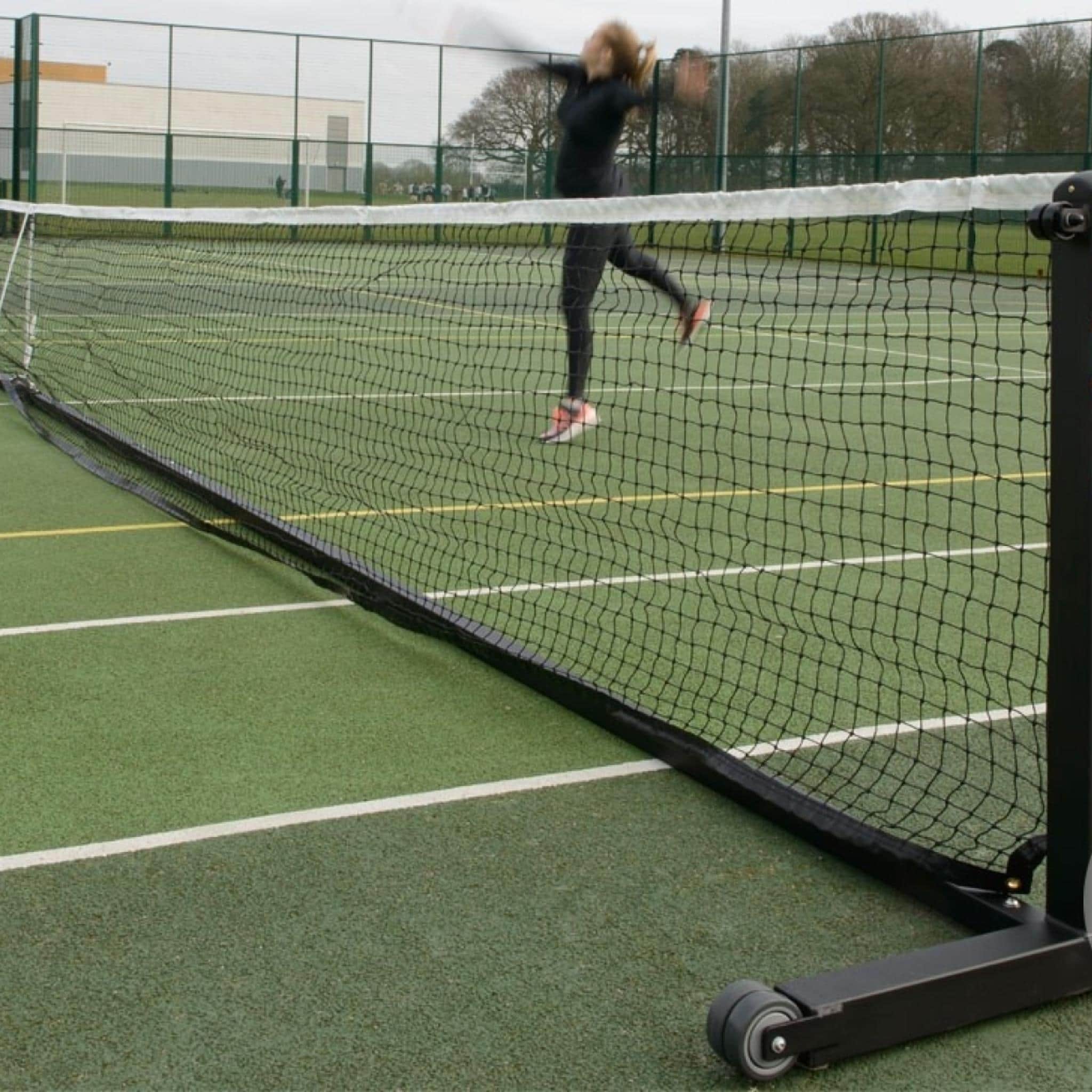
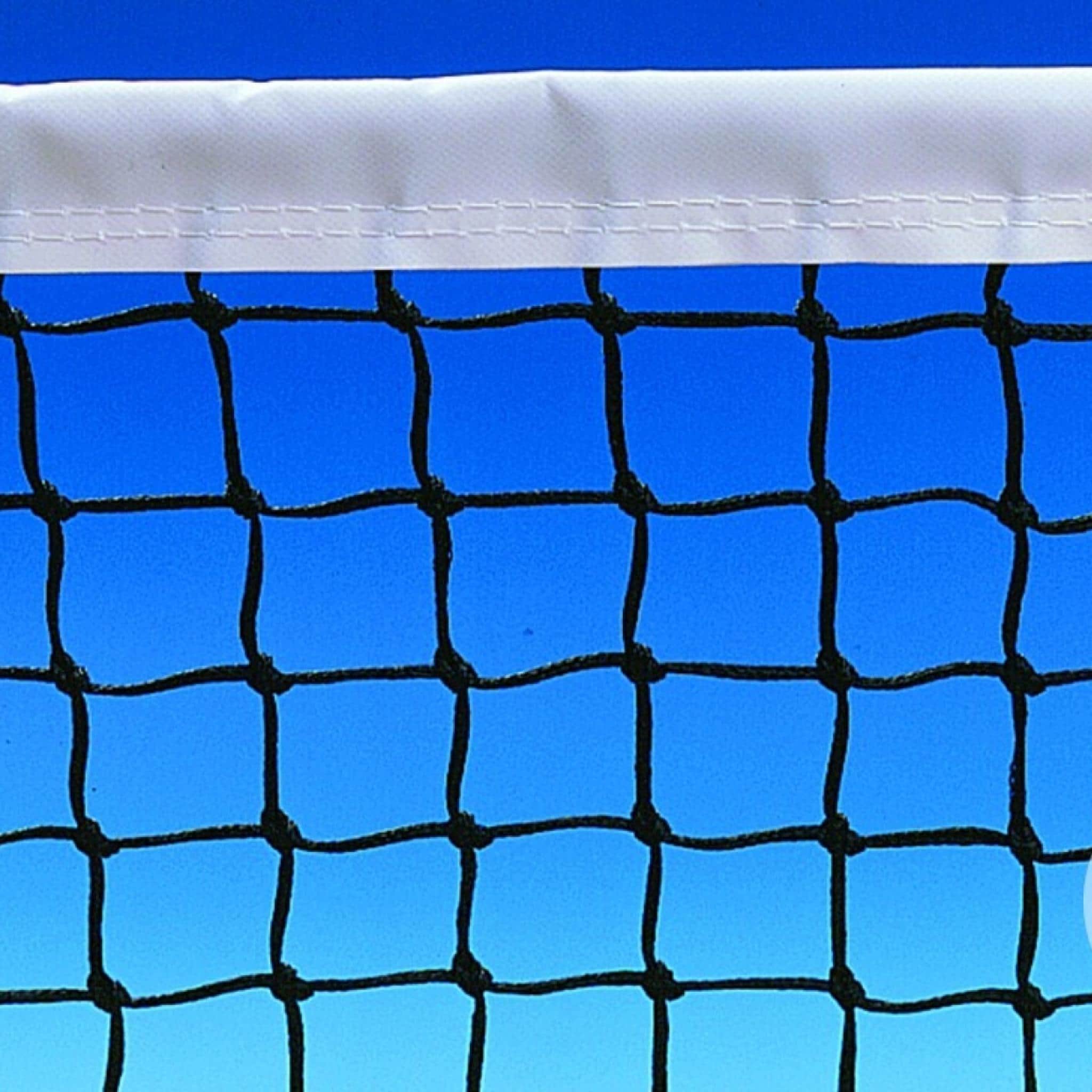
The height of a tennis court net is 1.07m (3ft 6in) at the posts and 0.91m (3ft) in the centre. The net posts are 0.91m (3ft) outside of both singles and doubles courts.
How much space do you need for a tennis court?
A standard tennis court court requires at least 36.58m (120ft) by 18.29m (60ft), or 668.9m² (7,200ft²). A tournament court requires 39.62m (130ft) by 21.34m (70ft), or 845.42m² (9,100ft²), providing space for umpires and player overrun. If you have less than 1½ acres of land, you will not have enough space to install a tennis court.
What is the best surface for a tennis court?
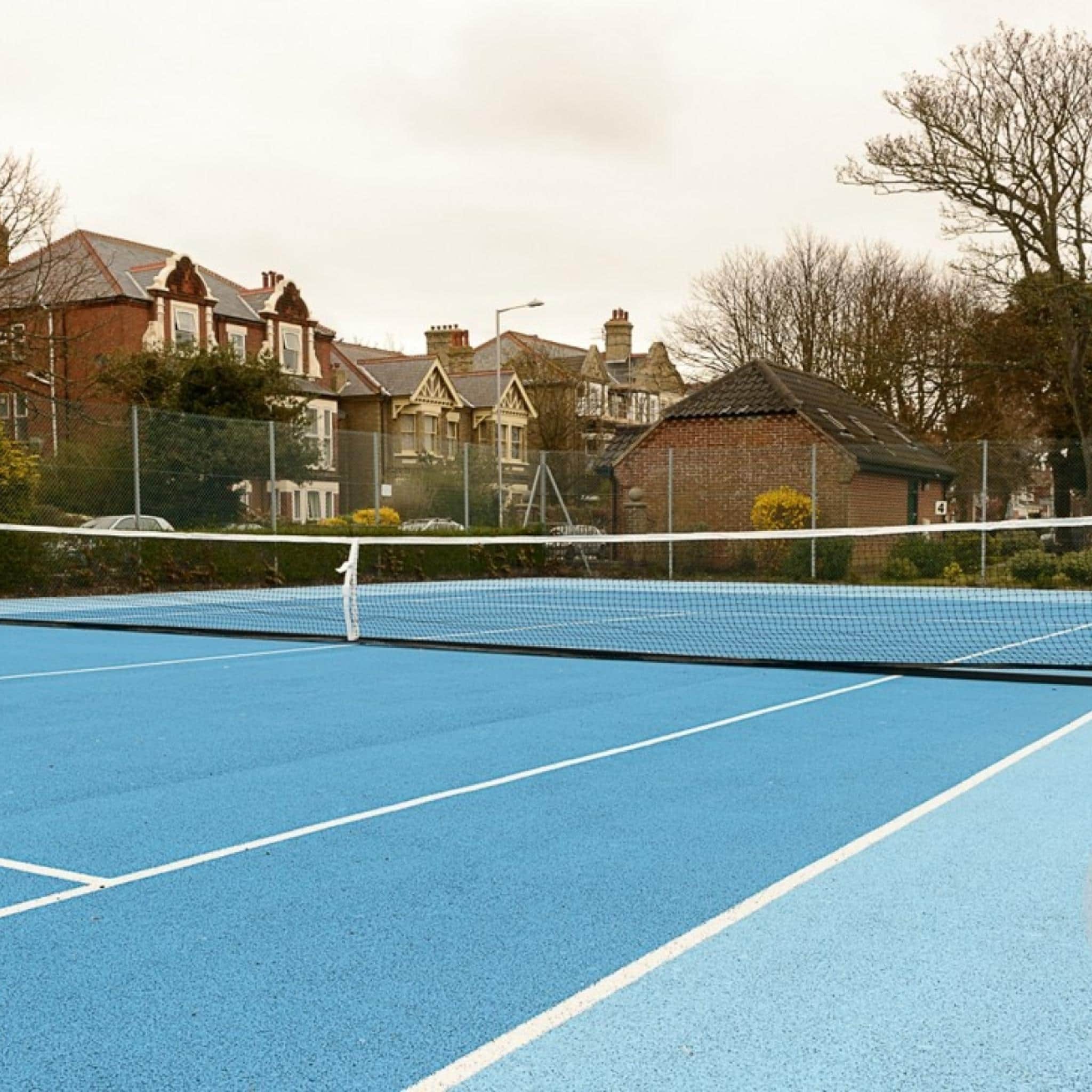
There are three types of tennis court surface: grass, clay and hard. Grass courts are better suited for fast-paced games, while clay courts slow down the game and the soft surface provides a higher bounce. Both courts are high maintenance, whereas the hard court is a low maintenance surface. Hard courts are a middle ground between the fast and slow games of the grass and clay courts.
How wide are the lines on a tennis court?
The lines of a tennis court should be at least 2in in width, with the baseline being at least 4in wide.
How high is an indoor tennis court?
The minimum height of an indoor tennis court is 9m above the net line. The ceiling should be 5.75m above the baseline and 4m above the rear of the run back (the distance behind this baseline). These spaces must be unobstructed.

Did you know that we make tennis posts, nets and equipment for many of the professional venues and institutions? You can view our full tennis range here.