




How to Coach Teenagers in Football
How to Coach Teenagers in Football
When coaching youth football (ages 11-18), a different approach is required compared to younger players. A key thing to remember when coaching teenage players is that they are very susceptible to tone, language and mood, and so it's important to portray activities and training sessions in a way that appeals to them.
Even within this age group players will develop at different paces and so patience is a particularly important attribute for a coach. The most effective way to coach youth football is to ensure everyone has a positive experience and is involved in the session fully, but also adjusting approach and drills according to a player's experience and physical development – while they are in the same category, an 11-year-old will likely be focusing on physical development, while a 17-year-old will likely have much more experience and will be refining position-specific techniques for 11v11 matches.
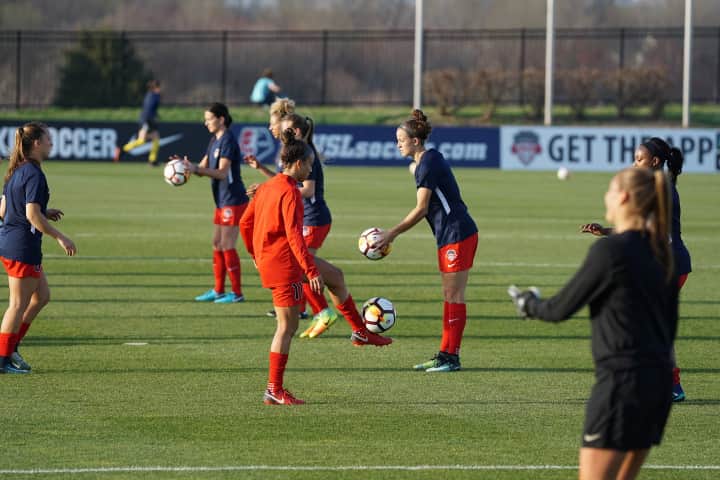
Coaching ages 11-13
Very few players respond well to criticism, but teenagers at a transitional point in their physical and mental development could be particularly sensitive. This age group also usually coincides with a change to Secondary School, which is often a highly stressful time for a child.
As children near their teenage years, they begin to progress from learning fundamental skills towards preparing to play in competitive matches. Children at this age are at the point where they are beginning to pick up more advanced skills, drills and match-play. This group should be starting to make their own decisions in terms of when to pass, shoot and press on the ball.
Core skills that teenagers will begin to develop at this stage are dribbling, touch and control, shooting, passing accuracy, speed and agility. However, it is important not to focus too much on 'results' and instead make sure the players are still having fun.
Coaching ages 14-15
At this age, teenagers are less likely to seek the approval of their parents and will be more so keen to please their peers. It is important to bare this in mind when creating session plans as players increasingly become concerned with what is 'cool' and so there is always the challenge to encourage them that learning/training is still an important thing to do.
While they should be continuing to develop the core skills, more focus will need to be on helping with emotional development. The FA's Advanced Youth Award aims for all young players to develop the following character traits:
- Well-behaved
- Good learner
- Recognise the importance of teams
- Can manage relationships
- Able to show independence.
Coaching ages 15+
As players begin to near the end of their teenage years, they will begin to move towards professional training routines. As a coach, you will have to help them feel comfortable with a more intense schedule and dealing with discipline and focus as they balance football with leaving school and the move into work or higher education. This is particularly important for those who are considering pursuing football as a career.
Specialising in a certain position and developing the key skills for that discipline will be vital to establish at this age for those looking to continue playing at any level as an adult.

Drills
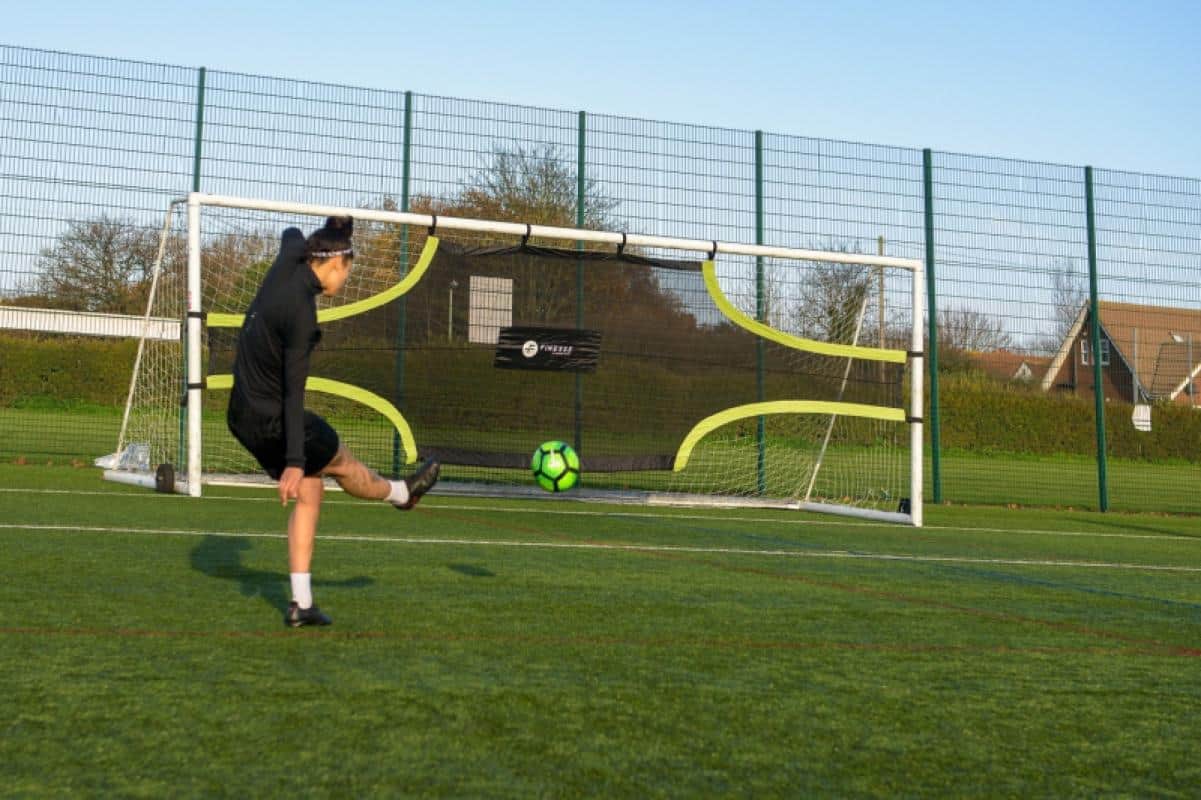
Football is a very technical game and so it is important to encourage players to take part in regular, specific drills to improve their game. While younger players will use drills to become comfortable with fundamental skills, often, drills are more effective at youth level with some added equipment to replicate match conditions and focus on specific aspects of the game. The opportunity to add a competitive element for those older than 14 will also help grow teamwork within the group.
While the following drills are recommended at certain age groups, they can be adjusted to be made harder or easier, for example, increasing the passing distance or space between cones.
Ages 11-13
Dribbling
This is a critical skill to master at the earliest possible age as it is essential for all aspects of the game. The sooner players are comfortable moving with the ball at their feet, the quicker their development will be.
Dribbling is one of the first drills which young players will learn but developing it as they reach their teenage years is key to their progression. Even modern goalkeepers need to be as confident with their feet as they are with their hands. When putting together dribbling drills for players, it is essential to consider how to improve their balance, touch, control, awareness and creativity.
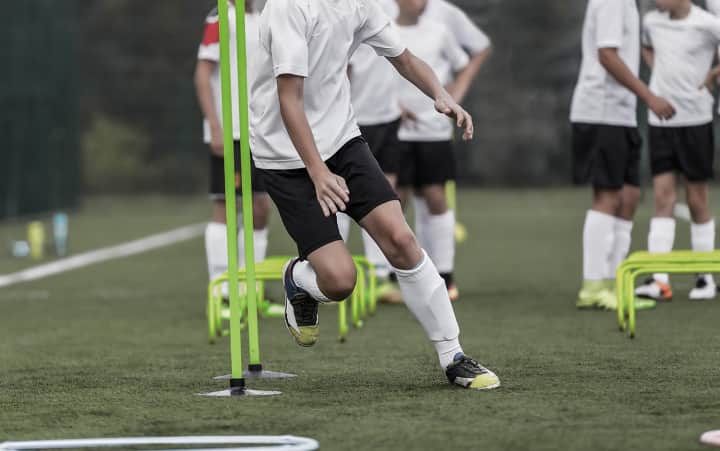
Method: Dribbling with cones/ poles
Use cones and agility poles to practise key skills needed for dribbling.
How to do it:
- Players line up one behind each other (aim roughly to have 4 in a line, so you can have as many lines as you need to accommodate for this).
- Player at the front starts with the ball at their feet
- Player dribbles to the first cone, about 20 metres away from the start
- When players get to the cone, they must then weave between the cones which have been laid out (6 cones)
- At the end of this, players will reach the agility poles, players must weave between these until they get to the end (6 agility poles)
- When players are weaving through the obstacles, make sure the ball is keeping close to their feet and is under control at all times
- When players reach the end of this, they must make quick touches with the ball and get back to the start as quickly as possible
How many?
Players should all do this once with the quickest team winning.
If there are 6 or less players, everyone should run it through twice.
Passing Accuracy
Young players will begin to understand the importance of accurate passes and why you should be conscious of where you are putting the ball. They will likely have some familiarity with passing drills already, but at this age building confidence with a range of passing options will help to improve their overall game.
Method: Passing between cones
Use cones to create a gap for players to aim between when passing.
How to do it:
- Place a cone in a large space, about 30 metres away place two cones about a metre apart and then place another cone about 50 metres away from that
- Have two players at each single cone
- Players should be looking to pass the ball to the other player, making sure it goes in between the gap the two cones have created
- Players can pass the ball, then run to the cones in the middle, then run back to their cone, then receive the ball
How many?
Players should be looking to complete 10 passes each.
If this is achievable, you can increase the distance between players and make them pass further, reduce the number of touches allowed or add time limits.