






A Guide to Rugby Pitch Dimensions, Sizes and Markings: Everything you ever needed to know

Rugby Union Pitch Dimensions
Whether you're a groundskeeper at a sports club or an avid fan of the game, find out the essential line markings and dimensions that make up a rugby union pitch.
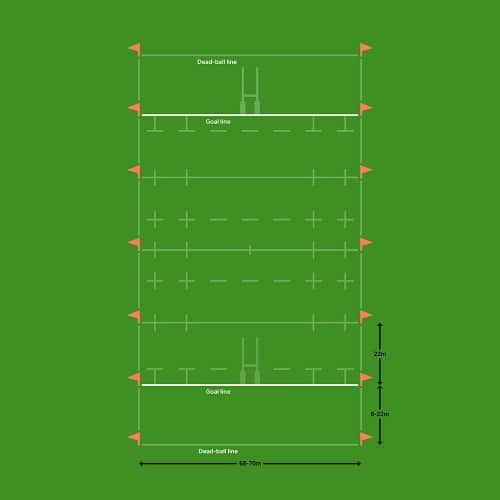
The dimensions of a rugby pitch in metres (m) are usually 100m from goal line to goal line (try line to try line) and a width of 70m. The layout also has an additional 6-22m at each end for the in-goal area, measured from goal line to dead-ball line.
Are all rugby pitches the same size?
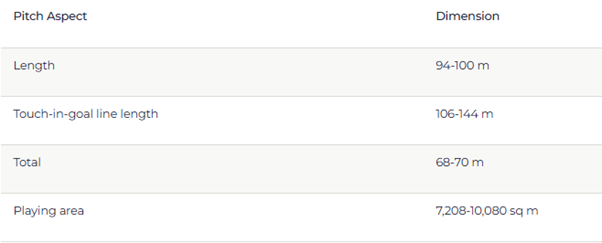
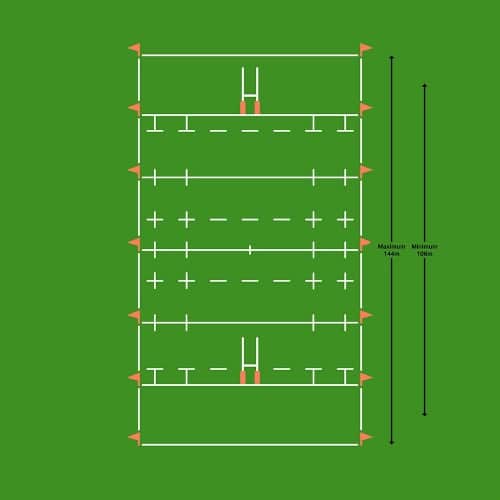
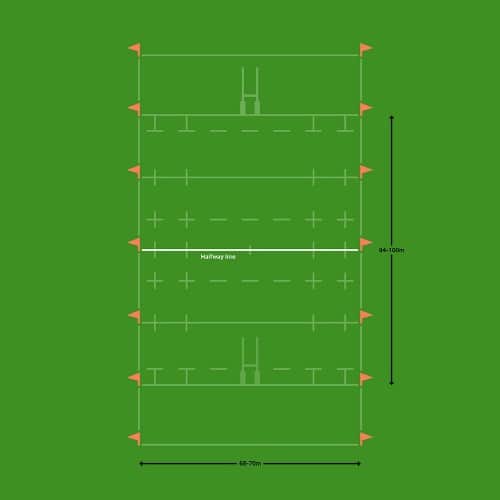
Rugby pitch dimensions can vary. The length of a rugby pitch can be between 94-100m (106-144m including the in-goal areas) and the width can be between 68-70m. Bearing in mind that the minimum and maximum rugby field dimensions, the playing area can be between 7,208-10,080 sq m.
What is the minimum size of a rugby pitch?
The minimum size of a rugby pitch is 106m. This is 94m from goal line to goal line, plus 6m at each end for the in-goal areas. The width must be at least 68m, meaning that the minimum playing area possible is 7,208 sq m.
How long is a rugby pitch?
The length of a rugby pitch can vary. It is typically 100m from goal line to goal line but can be as short as 94m. An in-goal area at each end of 6-22m means the total length is 106-144m.
How wide is a rugby pitch?
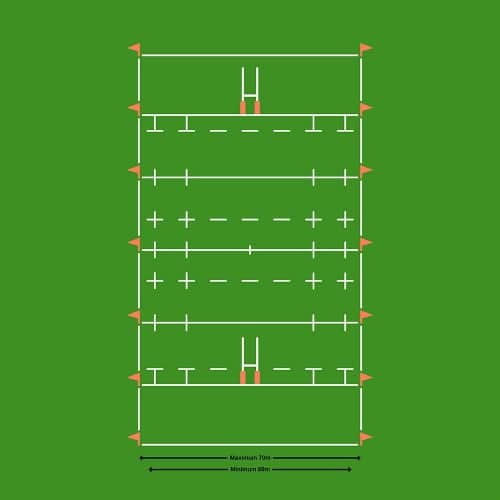
In world rugby rules, a rugby field must be a minimum of 68m from touchline to touchline but can measure up to 70m wide.
Rugby pitch dimensions in feet
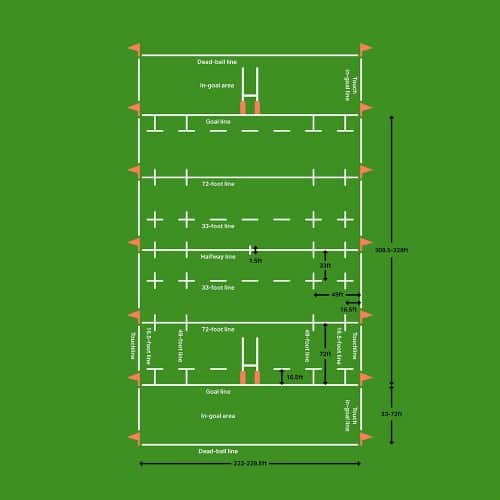
- Goal line to goal line: 308.5-328ft
- In-goal area: 33-72ft
- Total length: 341.5-400ft
- Width: 223-229.5ft
- Pitch area: 76,154.5-91,800ft
Rugby pitch dimensions in yards
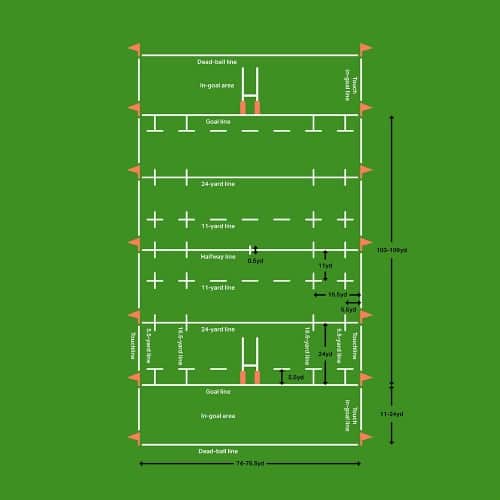
- Goal line to goal line: 103-109yds
- In-goal area: 11-24yds
- Total length: 114-133yds
- Width: 74-76.5yds
- Pitch area: 8,436-10,174.5yds
Technical areas
The technical areas are typically where the coaching staff, replacement players and water carriers are housed. It is also known as the sin bin, as players that receive a yellow card must retire here for 10 minutes before they can re-join the game. The technical areas must be at least 1m back from the touchline and no more than 10m long.
Pitch Markings
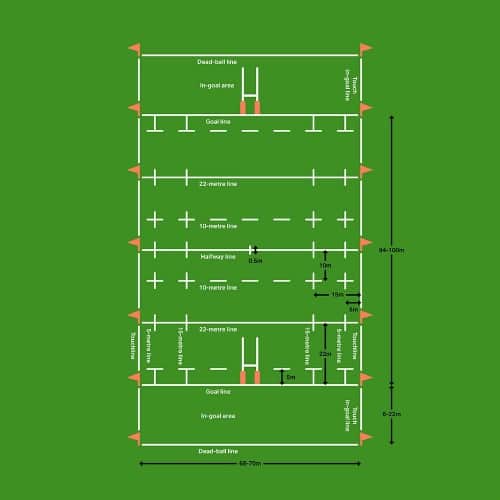
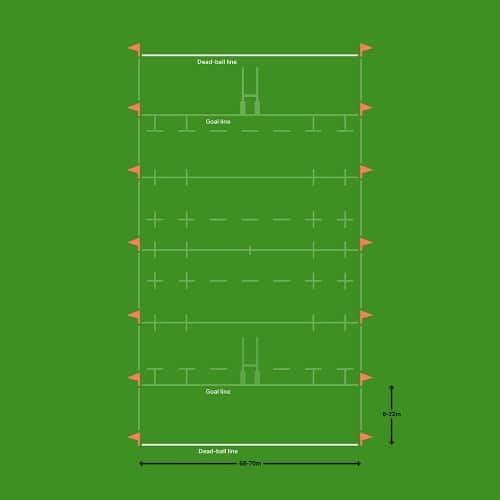
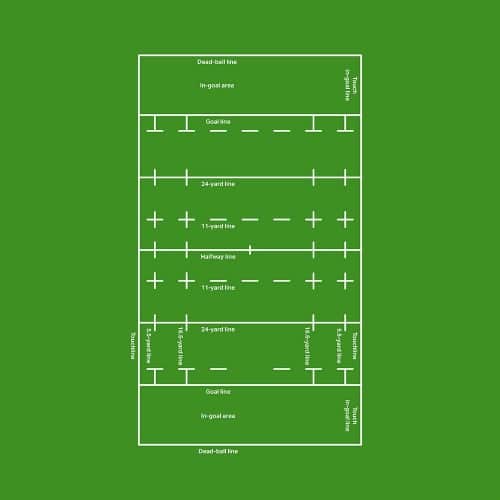
Rugby pitch markings may seem complicated at first but are relatively straightforward to understand and replicate. The marking dimensions (for the main solid white lines) are below:
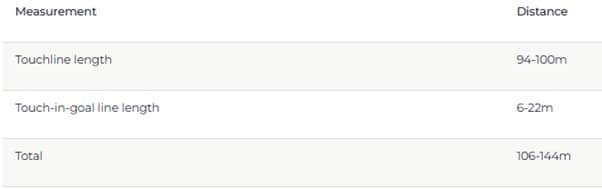
- Pitch length and width: the touchlines should be 94-100m (103-109yds) long and the goal lines (also known as try lines) should be 68-78m (74-76.5yds) wide.
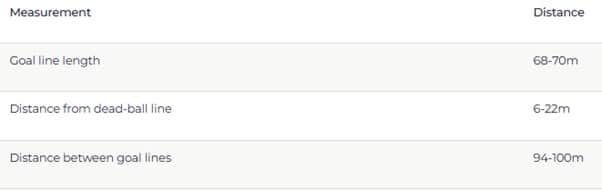
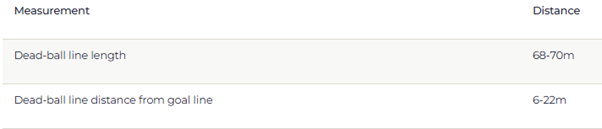
- Dead-ball line: this marks the end of the in-goal area at each end of the field and should be 6-22m (11-24yds) from the goal line.
- Goal lines: the goal lines are parallel to the dead-ball lines and measure 68-78m (74-76.5yds) across.
See below for more on rugby field markings, including solid and dashed lines.
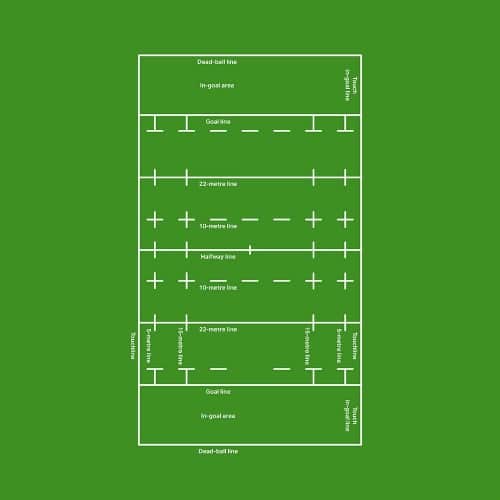
What are the markings on a rugby pitch?
The markings on a rugby pitch set out the playing areas and positions relevant to certain rules. The following are marked with solid white lines.
- Pitch size: 94-100m (103-109yds) long by 68-78m (74-76.5yds) wide.
- Dead-ball line: 6-22m (11-24yds) from touch-in-goal line to touch-in-goal line.
- Goal lines: 68-78m (74-76.5yds) from touchline to touchline.
The touchline
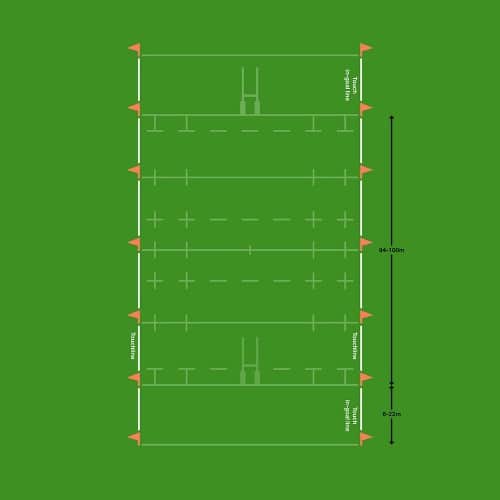
The touchline runs lengthways on either edge of a rugby pitch and mark the edge of the field. In some sports, this is known as a side line. When the ball passes over this line, it is out of play. The touch-in-goal line is a continuation of the touchline at both ends of the field and marks out the boundary of the in-goal area.
The goal line
The goal line runs across the width of the pitch perpendicular to the ends of the touchlines. It is also known as the try line. A try is a way of scoring and happens when the ball is 'grounded' or touched to the pitch between the goal line and dead-ball line (also known as the in-goal area). The goal posts are in the middle of the goal line. Teams can also score points by kicking the ball over the cross bar (drop goal).
The 22-metre line
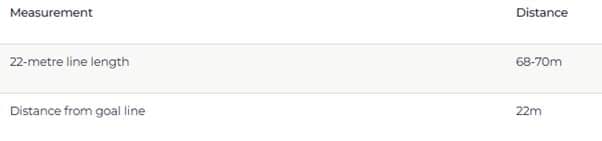
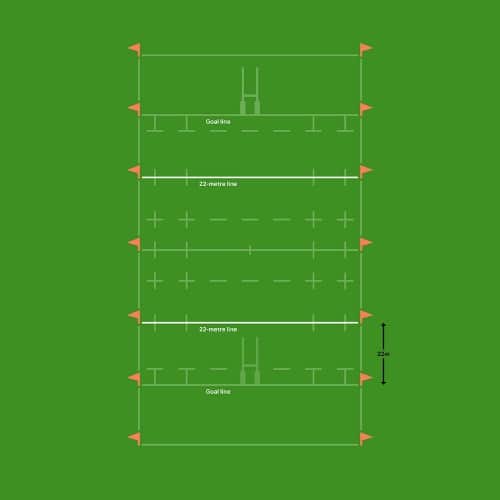
The 22-metre lines are marked in solid white. If the opposition have the last touch before the ball travels over the 22-metre line, the attacking team can kick it forwards and over the touchline – the game will restart at the point at which it went out of play.
The dashed line
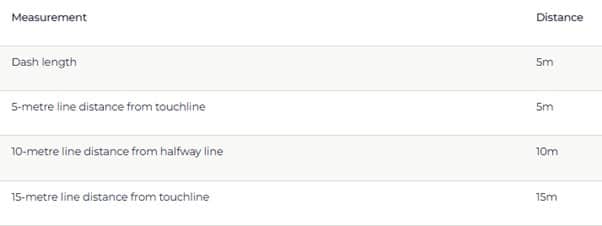
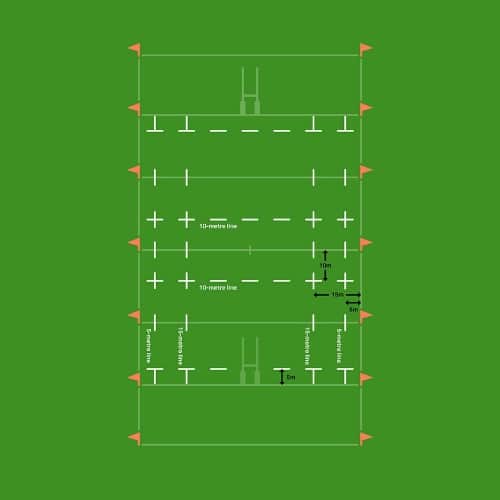
There are three sets of dashed lines on a rugby pitch with each 'dash' measuring 5m. The 5-metre lines and 15-metre lines are parallel to the touchline. The 5-metre lines marks the minimum distance from the touchlines and goal lines that a scrum can take place. The 15-metre line is used for throw-ins – if the ball crosses this line, it can be played by anyone.
The halfway line
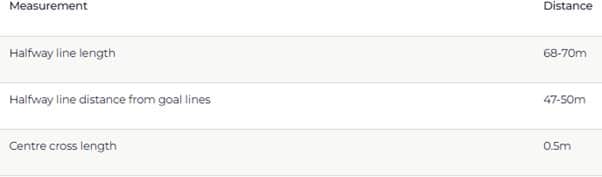
As you may expect, the halfway line divides the field of play into equal ends. Game play begins at the centre cross, in the middle of the halfway line, and is drop-kicked by the starting team toward the opposition at least 10m. The game restarts in the same way after points have been scored.
The dead-ball line
The dead-ball line marks the end of the in-goal area and field of play. Once the ball crosses this line, or is in possession of a player that is over the line, it becomes 'dead' (out of play) and results in a scrum or drop-out.
Rugby pitch lines in feet
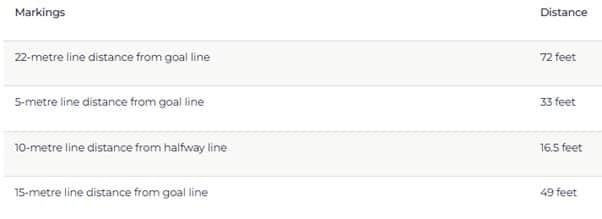
Rugby pitch lines are either solid or dashed. The touchline and touch-in-goal line, goal line (try line), halfway line, 22-metre line (72-foot line) and dead-ball line are solid. The 5-metre line (33-foot line), 10-metre line (16.5-foot line) and 15-metre line (49-foot line) are dashed markings.
Rugby pitch lines in yards
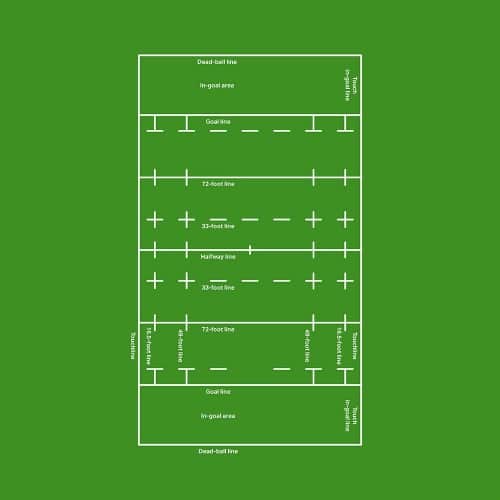
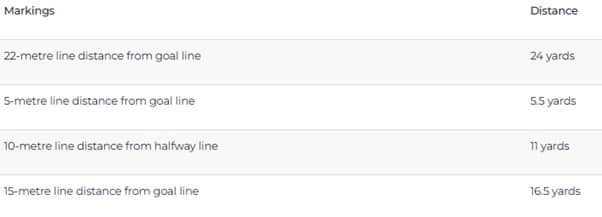
In rugby pitch markings, the touchline and touch-in-goal line, goal line (try line), halfway line, 22-metre line (24-yard line) and dead-ball line are solid white. Dashed lines are used to mark out the 5-metre line (5.5-yard line), 10-metre line (11-yard line) and 15-metre line (16.5-yard line).
The centre cross
The centre cross is in the middle of the halfway line and marks the very centre of the pitch. Gameplay starts from this point at the beginning of each half and after a goal is scored. The solid white marking that crosses should be 0.5m long.
Post Dimensions
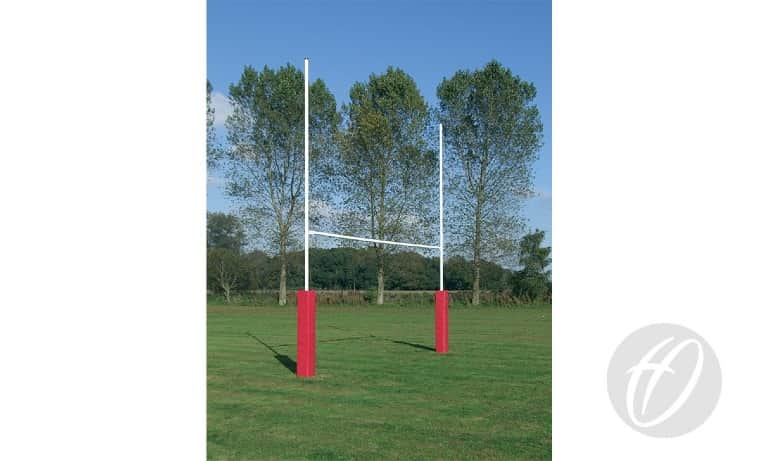
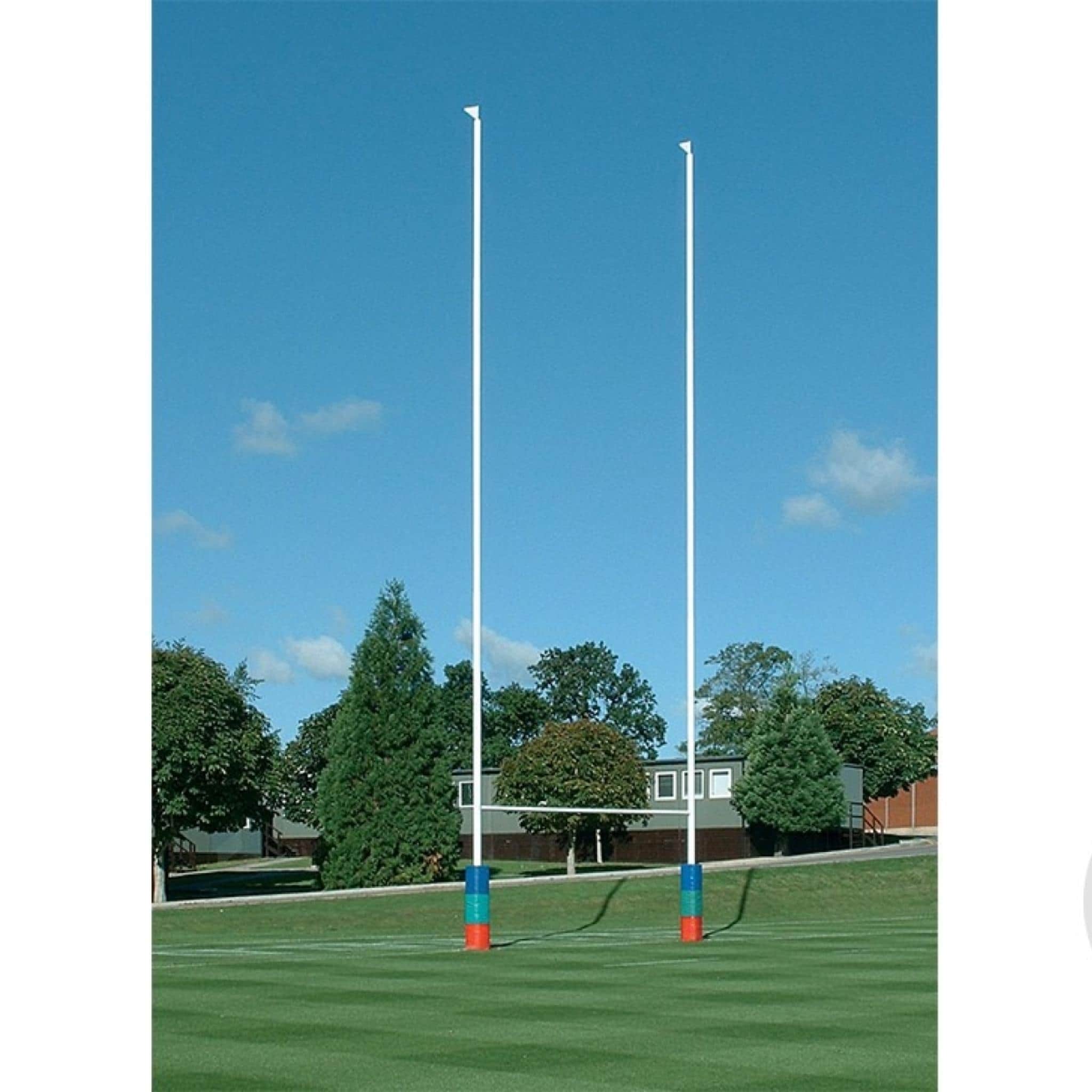
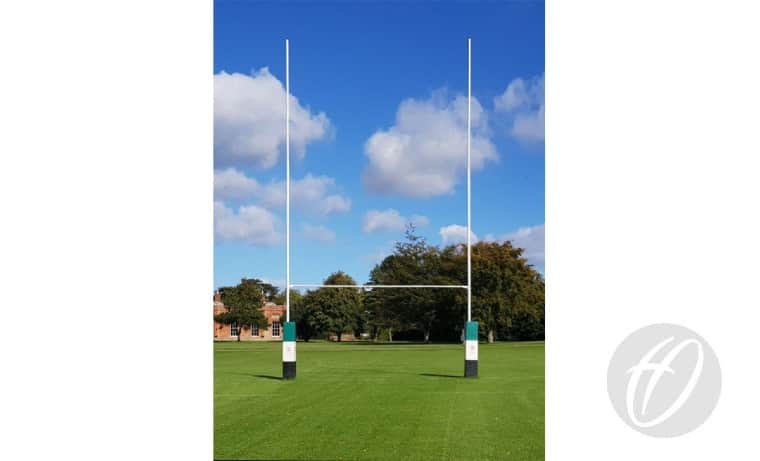
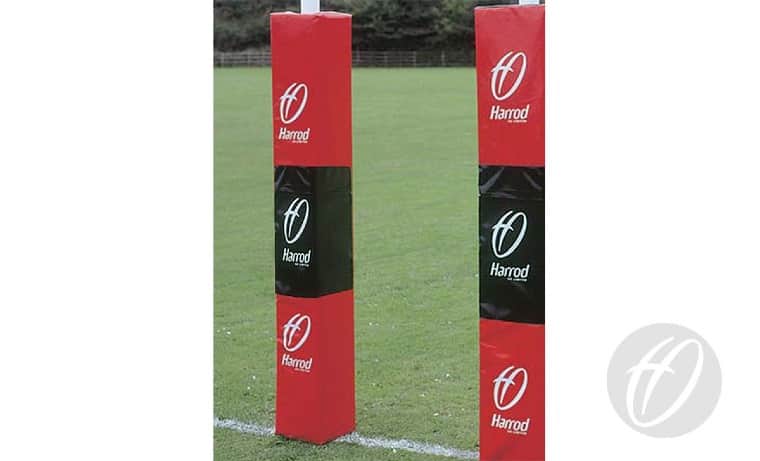
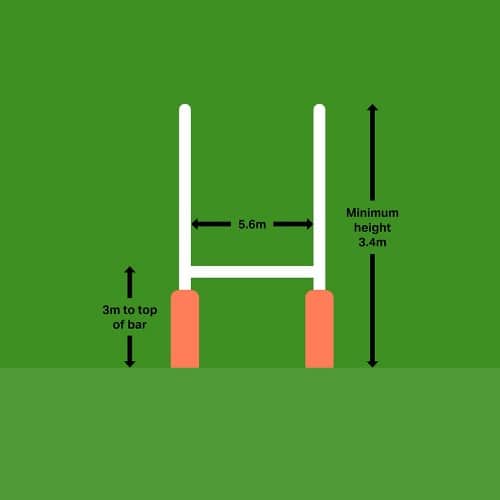
Rugby goal posts are placed in the middle of the goal line at both ends of the field. Rugby post dimensions are usually measured in metres: the posts must be 5.6m apart and at least 3.4m high. The top edge of the cross bar, which sits horizontally between the goal posts, must be 3m.
How far above the ground is the top edge of the crossbar?
The top edge of the cross bar on rugby goal posts must be 3m above the ground. The minimum height for each post is 3.4m and they must be placed 5.6m apart.
How many flags are on a rugby pitch?
There are 14 flags on a rugby pitch, which are placed along the length of the field. There are four corner posts where the dead-ball line and touch-in-goal line meet and another four where the goal lines and touchlines meet. The remaining flag posts are placed at the both ends of the halfway line and 22-metre lines.
Is a rugby pitch bigger than a football pitch?
A football (soccer) pitch is 90-120m along the touchline (side line) and 45-90m wide with a total playing area of 4,050-10,800sq m. A rugby pitch is 106-144m long (including the in-goal area) by 68-70m wide with a playing area of 7,208-10,080sq m. While the maximum playing areas are a similar size, the minimum size of a football pitch is almost 80% smaller than a minimum-sized rugby pitch.
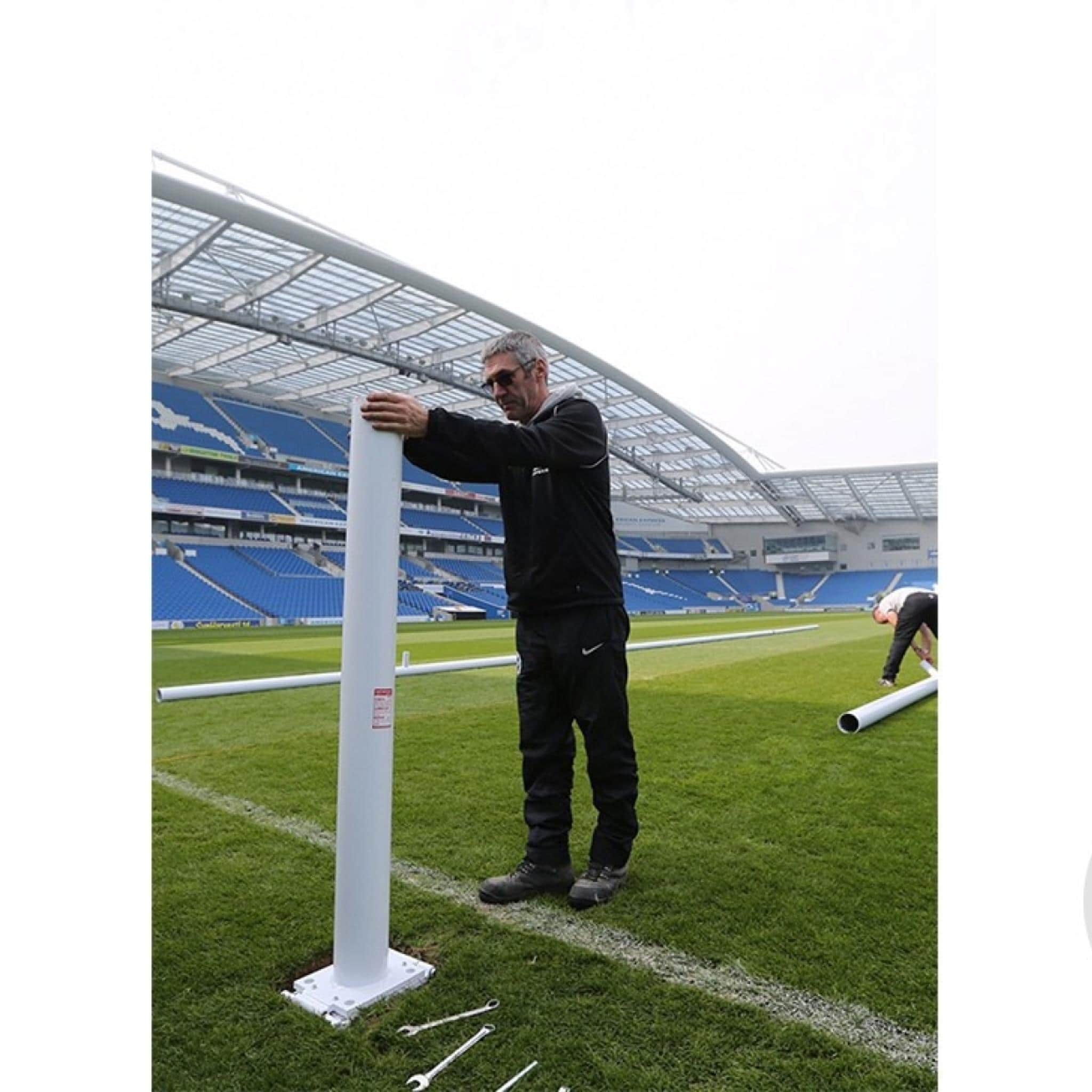
Did you know that we make rugby posts and equipment for many of the professional clubs? You can view our full rugby equipment range here.